It all began because of some unhappy people.

I started out, like most of us, as an employee. Then I became an entrepreneur and soon a business educator and business consultant.

I consulted with large corporations like Apple, Fujitsu America, and Pacific Bell (just before the feds broke up Ma Bell), but I found my greatest satisfaction working with individuals and small ventures.

Providing them with practical advice was, and still is, rewarding to me, but I started to see a troubling pattern: an awful lot of my clients—and colleagues and friends—were unhappy in their work.

I wanted to help.

Drawing on my longtime interest in personal growth strategies, Eastern philosophies, and educational theory, I spent several years developing a system I call Good Work Guidance™ that I have now provided to more than 500 individuals (and some couples in business together).

Right Livelihood, Simple Living, Mindfulness

Almost four decades ago, I started introducing the concepts of right livelihood, simple living, and mindfulness to my small business clients as a way to share what I was learning through my own professional growth process.

I now pursue my personal “right livelihood” as a writer, teacher, and advisor to employees and entrepreneurs who want a more meaningful work life.

(Simple explanations of “right livelihood,” “simple living,” and “mindfulness” are here.)

“I consider Claude as my mentor…. I feel incredibly helped by Claude and his Good Work Guidance, helping me develop my teaching of writing through my independent online school.”
Andy Courturier
Andy Couturier
entrepreneurial writing teacher

My Approach to Coaching

“Claude Whitmyer is an invaluable consultant who harmonizes matters of the marketplace with those of the spirit. Without him, I wouldn’t know that “right livelihood” is a practical reality, not just a philosophical ideal.”
Maureen Redl
Maureen Redl
psychotherapist

I don’t begin with a formula or assume that everyone should follow the same path. I begin with the person: where you are now, what matters to you, what your life allows, and what may be ready to emerge.

Five simple practices shape the way I work.

— Pay attention. We slow things down enough to notice what is actually happening—not just what you think you should be doing. We listen for what gives you energy, what drains it, what you may be avoiding, and what keeps asking for your attention. This is where mindfulness enters the work.

— Clarify what matters. We sort through your values, abilities, needs, hopes, responsibilities, and concerns. The aim is not to discover one perfect calling. It is to become clearer about what would make your work meaningful and worthwhile at this stage of your life.

— Find the right fit. Good work has to fit more than your talents or interests. It also has to fit your health, energy, relationships, financial needs, desired pace, and present season of life. If you are building a business, it must also meet a real need and work in the world. I think of this as right livelihood: work that serves life, contributes something useful, and helps pay the bills.

— Take the next workable step. Clarity often comes through action, not before it. Instead of trying to create a complete plan for the rest of your life, we identify a small, useful next step. You try something, pay attention to what happens, and use what you learn to decide what comes next.

— Think it through together. You remain responsible for your choices. My role is to listen closely, ask useful questions, notice patterns, question assumptions, and offer practical guidance when my experience can help. Sometimes the work feels like coaching, sometimes advising, and sometimes mentoring. In every case, it is a thoughtful conversation aimed at helping you see more clearly and move forward in a way that is genuinely your own.

This approach can help whether you are reconsidering your work and purpose, returning to a neglected creative calling, starting a smaller or one-person business, or reshaping an existing business so it better fits the person you have become.

The Four-Step Process

Good Work Guidance™ consists of this simple four-step process:

    • Step 1. We focus on your personal life purpose and the goals and objectives implied by that purpose.

    • Step 2. We clarify your challenges and opportunities and uncover your personal strengths and weaknesses.

    • Step 3. We develop a plan of action that uses your strengths and compensates for your weaknesses to overcome your challenges and make the most of your opportunities.

    • Step 4. You lay the foundation for ongoing right livelihood through the practice of:

      • Mindfulness
      • Simple living
      • Self-reliance
      • Service to your community

Throughout, you receive:

    • Ongoing coaching guidance
    • Consulting or technical advice as needed
    • Handouts as needed, including:
      • Practice exercises
      • Worksheets
      • Tip sheets and checklists
      • Bonus articles and essays

Why me?

Three seminal experiences have profoundly impacted my approach to Good Work Guidance™ and Good Business Advice™:

  • I am the longtime coordinator of The Briarpatch, a global network of several hundred right-livelihood businesses.

    • In this volunteer role, I have provided guidance and support to hundreds of creative, cause-driven, or entrepreneurial individuals who share my values of collaboration, integrity, and mindfulness.

  • I was a founding board member and chief financial officer of The Apprentice Alliance, a non-profit that was active in the 1980s and 90s matching eager learners with experienced artists, artisans, craftspersons, and makers, as well as experts in the trades and business.

    • This work greatly expanded my notion of how people can move toward more meaningful work.

  • I was a founding board member and chief financial officer of Compumentor (now TechSoup), an agency that matches tech experts with non-profits that need low-cost technical support.

    • This is where I learned that technology can be THE great equalizer for small ventures.

“What I get from your workshops is a chance to assimilate what right livelihood means. You were always guiding, but you were also thinking, wondering, listening, observing – and applying what you were getting from the businesses we visited.”
Deanna Marquart
Deanna Marquart
legislative analyst

My Books

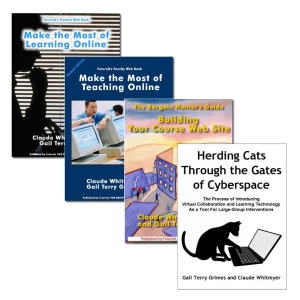
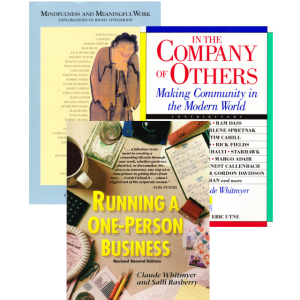
I’ve reported my own learnings in three print books and dozens of ebooks about right livelihood, meaningful work, and information technology.

My three print books are:

Learn More

Stay In Touch

Start a Conversation

Use My Contact Page

Join the Meaningful Work and Meaningful Life Project

Read and comment on Meaningful Work Letters on Substack: